
How Trauma Affects the Brain—and How Therapy Can Help
If you've experienced trauma, you may find yourself asking:
Will things ever get better?
Can I really heal from this?
Why can't I shut off my brain?
If those questions sound familiar, you're not alone. Many people who have experienced trauma wonder why they continue to feel anxious, overwhelmed, or "stuck," even long after the event has ended.
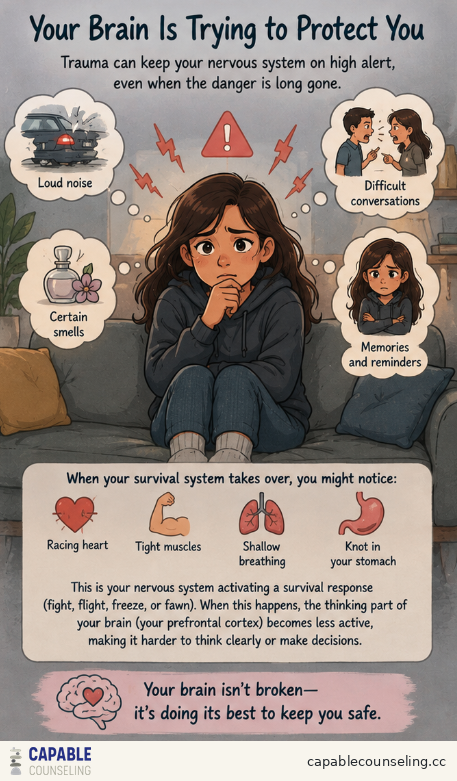
The good news is that your brain isn't broken—it's trying to protect you.
Understanding How Trauma Affects the Brain
One of the brain's primary jobs is to keep you alive. When something frightening, painful, or overwhelming happens, your brain learns from that experience so it can recognize similar danger in the future.
Sometimes, however, the nervous system remains on high alert long after the threat has passed. Rather than feeling like the trauma is over, your brain and body continue responding as though danger could happen again at any moment.
The amygdala, an area of the brain involved in detecting threats, reacts incredibly quickly. Its job is to keep you safe, but it cannot always distinguish between a current threat and a reminder of a past one. A loud noise, a difficult conversation, or even a certain smell can trigger the same alarm system that once protected you.
When this happens, you may notice your heart racing, muscles tightening, shallow breathing, or a knot in your stomach. Your brain signals your body to prepare for danger, and your body sends those signals back to your brain, reinforcing the feeling that something isn't safe.
This is your nervous system activating a survival response, often called fight, flight, freeze, or fawn. When you're in this state, thinking clearly becomes much harder because the prefrontal cortex, the part of the brain responsible for reasoning, planning, and decision-making, becomes less effective while your survival system takes over.
Healing Begins with Regulation
Here's the encouraging part: dysregulation isn't the enemy.
Your nervous system is doing exactly what it was designed to do—protect you.
The question isn't whether your brain reacts. The question is whether it can recognize when the danger has passed and return to a place of safety.
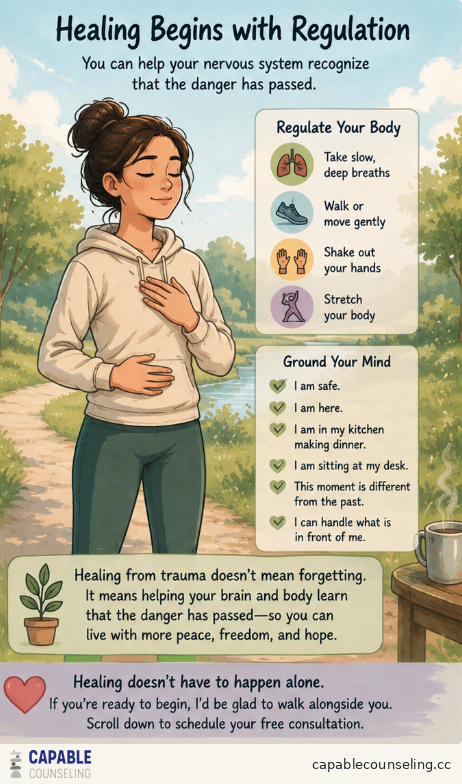
One of the fastest ways to begin calming your nervous system is through gentle movement and intentional breathing. Try taking slow diaphragmatic breaths, stretching, shaking out your hands, walking, or simply standing up and moving your body. These actions can help bring your attention back to the present moment and signal to your nervous system that you are safe.
Once your body begins to settle, grounding yourself with truthful, present-focused statements can also help. You might say:
I am safe.
I am here.
I am in my kitchen making dinner.
I am sitting at my desk.
This moment is different from the past.
I can handle what is in front of me.
These statements help remind your brain that the traumatic event is not happening right now, allowing your thinking brain to become more engaged so you can respond intentionally rather than react automatically.
Trauma Therapy Can Help
Healing from trauma doesn't mean forgetting what happened. It means helping your brain and nervous system recognize that the danger has passed so you can live with greater peace, flexibility, and confidence.
Trauma therapy provides a safe place to process painful experiences, understand your body's responses, and develop practical tools for emotional regulation. Over time, many people find they are no longer controlled by fear, anxiety, or the constant feeling of being "on edge."
If you're ready to begin healing from trauma, you don't have to do it alone. Working with a trauma-informed therapist can help you better understand your nervous system, process past experiences, and move toward a life that feels more grounded, connected, and hopeful.
Healing doesn't have to happen alone. If you're ready to begin healing, I'd be glad to walk alongside you. Scroll down to schedule your free consultation.
Request a Confidential Consultation
Phone consultations are complimentary and will be returned within 24 hours of submission. To help me best meet your needs, please include your reason for seeking counseling, any questions you may have, and your preferred time for a consultation call.
Your privacy matters. From the moment you reach out, your information is kept confidential and secure. We do not share your information with third parties, except when required by law.
Consultation requests submitted after 5:00 PM on Saturday will be returned on Monday.