
Grief: Learning to Carry What You've Lost
Are you grieving the death of someone you love? A serious illness? A divorce or separation? A broken relationship? The loss of a job? A dream that never came to be?
If so, you're in the right place.
Although grief is most commonly associated with death, it is the natural response to losing someone or something that mattered deeply. Grief crosses every age, gender, culture, financial background, and belief system because loss is part of being human.
Simply put, grief is our emotional, physical, and psychological response to losing someone or something to which we formed a meaningful bond. The depth of your grief often reflects the depth of your love, your hopes, your values, or the significance that person or experience held in your life.
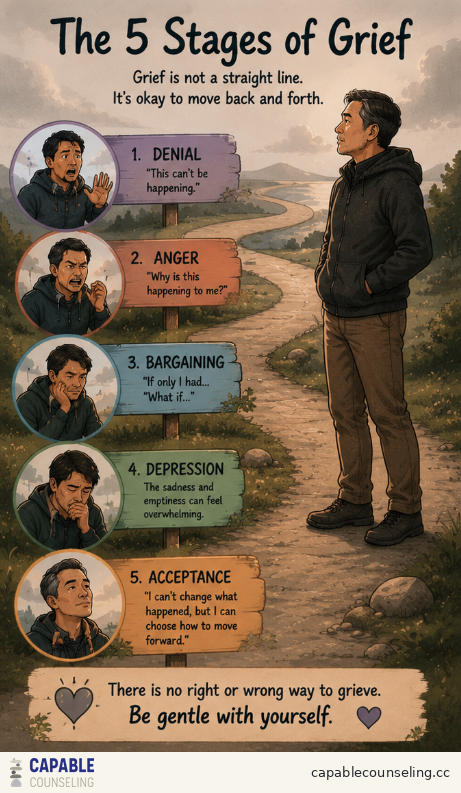
Understanding Grief
Many people are familiar with the five stages of grief: denial, anger, bargaining, depression, and acceptance. While these experiences can help us understand some of the emotions that accompany loss, grief is rarely experienced in a predictable order. You may move between these emotions, revisit them months or years later, or never experience some of them at all.
Denial
Denial often appears during the initial shock of a loss. It can feel like disbelief, numbness, or difficulty accepting that life has changed. Even long after a loss, moments of denial can unexpectedly resurface.
Anger
Anger is a common response to grief. You may feel angry with yourself, another person, medical professionals, circumstances, or even God. Sometimes anger reflects genuine injustice, while other times it serves as a way of expressing the overwhelming pain beneath the surface.
Bargaining
Bargaining often sounds like, "If only..." or "What if..." It may involve replaying events, wishing you had done something differently, or imagining ways the outcome could have changed. This is often our mind's attempt to regain a sense of control in an uncontrollable situation.
Depression
Grief often brings deep sadness, loneliness, exhaustion, or emotional numbness. Daily responsibilities may feel overwhelming, and activities that once brought joy may temporarily lose their meaning. These experiences are a natural part of grieving, although prolonged or severe symptoms should be discussed with a healthcare or mental health professional.
Acceptance
Acceptance does not mean forgetting, "getting over it," or pretending the loss no longer hurts. Instead, it means gradually learning to live alongside the loss, finding moments of peace again, and creating a new normal while continuing to honor what—or who—you have lost.
A Few Things to Remember About Grief
There is no "right" way to grieve. Your journey will not look exactly like anyone else's.
Grief cannot be rushed. Trying to avoid painful emotions often delays healing rather than preventing it.
You may revisit different emotions as anniversaries, birthdays, holidays, or unexpected reminders arise. This is a normal part of grief.
Healing does not mean forgetting. Many people find comfort in maintaining a meaningful connection through memories, photographs, traditions, or continuing the values their loved one passed on to them.
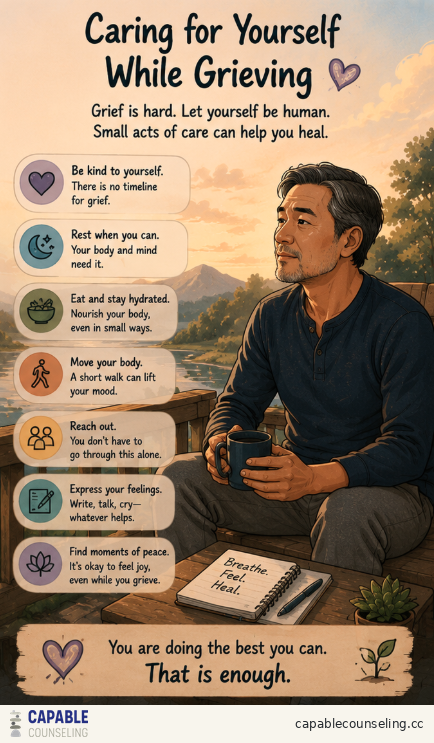
Caring for Yourself During Grief
While grief cannot be rushed, there are healthy ways to support yourself as you heal.
Offer yourself compassion. Spend time in nature. Stay physically active when you are able. Talk with trusted friends or family members. Write about your experiences. Look through photographs or tell stories about your loved one. Create a new tradition in their honor. Allow yourself permission to cry without immediately trying to "fix" the emotion.
Healing rarely happens all at once. More often, it happens one moment, one conversation, and one small step at a time.
When Should You Seek Help?
Grief is painful, but you do not have to carry it alone.
If your grief begins affecting your ability to care for yourself, maintain relationships, perform at work, or if you find yourself increasingly withdrawing from life, using alcohol or drugs to cope, or feeling hopeless, speaking with a therapist can provide support and guidance.
If you are experiencing thoughts of suicide or believe you may harm yourself, call or text 988, the Suicide & Crisis Lifeline, immediately or go to your nearest emergency room.
Grief changes us, but it does not have to define us forever. If you're looking for support as you navigate loss, I'd be glad to walk alongside you. Scroll down to schedule a free consultation.
Request a Confidential Consultation
Phone consultations are complimentary and will be returned within 24 hours of submission. To help me best meet your needs, please include your reason for seeking counseling, any questions you may have, and your preferred time for a consultation call.
Your privacy matters. From the moment you reach out, your information is kept confidential and secure. We do not share your information with third parties, except when required by law.
Consultation requests submitted after 5:00 PM on Saturday will be returned on Monday.